
Urban Local Bodies (ULBs) constitute the third tier of government in India and act as the direct interface of citizens with the state. Envisioned by the 74th Constitutional Amendment Act (CAA) of 1993, ULBs were meant to democratize urban local governance and improve public service delivery. Three decades later, however, their autonomy continues to be choked, largely through excessive state control and delayed election processes on the basis of an outdated and politicized delimitation and reservation system.

Delimitation implies redrawing municipal ward boundaries to reflect demographic change. It is one of the main means of guaranteeing democracy’s “one person, one vote, one value” principle. Constitutional indeterminacy has left this function in limbo. Article 243ZA assigns State Election Commissions (SECs) superintendence, direction, and control of municipal elections, but delimitation and reservation of wards is typically assigned to state legislatures under Article 246(3). This demarcation has enabled state governments to dominate local elections with overwhelming power, often postponing elections, changing boundaries of wards, and adjusting reservations, all of which erode the democratic purity of the local government.
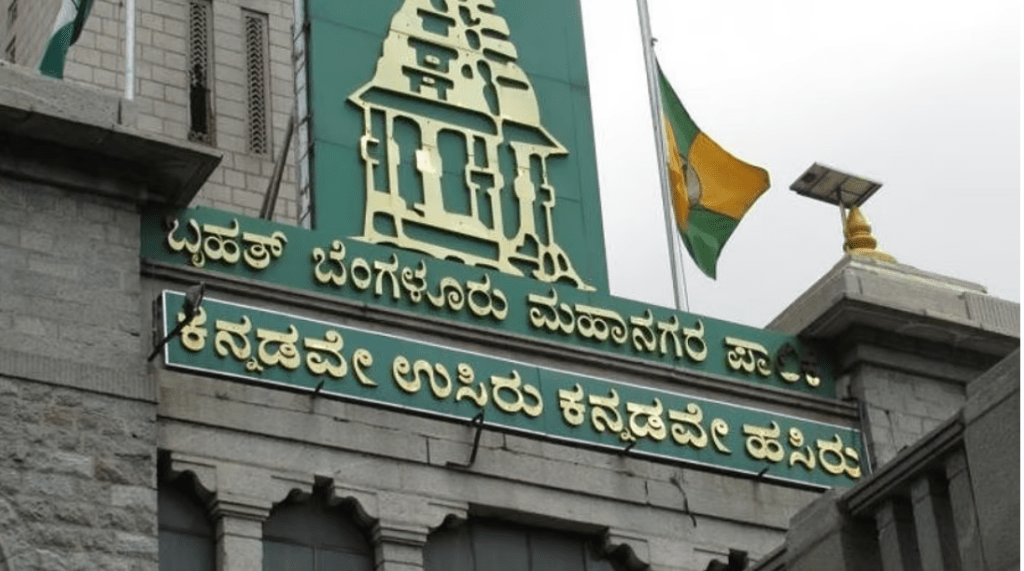
Karnataka is a prime example. The Karnataka Municipal Corporation Act, 1976, vests the state government with the powers of delimitation and reservation in ULBs. The consequence is a 22-month average delay in local elections across the state. The Bengaluru BBMP Council elections, scheduled in September 2020, were deferred in the aftermath of defective delimitation, a setback so huge that the High Court of Karnataka was forced to step in after a Public Interest Litigation (PIL) was moved by the SEC.
This reveals that the very system that facilitates democratic engagement is delayed or weaponized; it not only undermines public confidence but also institutional credibility.
The reservation process, aimed at giving due proportion to weaker classes, has also been marred by irregularity. State governments, in most cases, reserved wards proportionately to population figures. Maharashtra reserved 27% of wards for OBCs, which is not necessarily proportionate to population figures (Joshi, 2015).

Additionally, grievances such as “creamy layer” exclusion and politically driven reservations have led to court cases and consequent delays. These practices tend to reduce social justice to election arithmetic.
To mitigate these highly entrenched inefficiencies, India needs to revisit its institutional process of delimitation and reservation. The State Election Commission, being an independent constitutional body, is well placed to perform these tasks transparently and efficiently. The Comptroller and Auditor General of India’s (CAG) Performance Audit on Implementation of the 74th Constitutional Amendment also corroborates this, recommending that the SEC be assigned delimitation responsibilities.
It is better to take the census data at the ward level, which is more accurate and ensures equity than the larger assembly constituencies. Not only would it simplify the process of voting, but it would also revive public confidence in local democracy.
For an unproblematic and consensual devolution of powers, a high-level committee can be constituted to look into the viability and implications of vesting delimitation and reservation powers in SECs. Political neutrality of this committee will be anticipated, and it will comprise members of all the major political parties, former legal professionals and judges, election commission officials, and civil society actors. Its function ought to be to provide a balanced and comprehensive report in accordance with constitutional values, ground reality, and democratic principles.

The judiciary has to act proactively to ensure the conduct of timely elections to local bodies. High Courts, in specific, have to ensure that elections are held if there are delays, hold state governments and the State Election Commission accountable, and consider imposing penalties in cases of unjustified delay.
Judicial activism in this sense would serve as a check on executive complacency and bring back procedural discipline in local government.
The state government’s reluctance to relinquish control over local governments is natural in a federal arrangement. But it is counterproductive to maintain such control. Decentralization is not a surrender; it is a constitutional and developmental necessity. A healthy ULB system ensures more responsive public service delivery, greater community participation, and increased transparency and accountability.
By bringing together local institutions, India strengthens its base of democracy and creates a more participatory and robust system of government.
In a democracy as large and heterogeneous as India, strengthening the third level of government is not only desirable, it is indispensable. The difficulties presented by politicized delimitation and reservation, delay in elections, and interference by the State establish an imperative for change. Vesting this vital task in the State Election Commissions, backed by judicial scrutiny and institutional definition, can revitalize the integrity and timeliness of urban local body elections. This does not mark a mere administrative change, but rather a democratic necessity. Genuine decentralization empowers citizens, fosters trust in public institutions, and opens the door to responsive, accountable, and participatory governance. As India embarks on its journey toward inclusive urban growth and resilient governance, empowering autonomous local institutions through structural reforms can symbolise a significant leap toward a robust democracy.
References :
Joshi, B. (2015). Fixing Electoral Boundaries in India: Laws, Processes, Outcomes & Implications for Political Representation (M. S. Alam & K. C. Shivaramakrishnan, Eds.). Oxford University Press.
Comptroller and Auditor General of India. (2020). Report of the Comptroller and Auditor General of India Performance audit of Implementation of 74th Constitutional Amendment Act Government of Karnataka Report No.2 of the year 2020. https://cag.gov.in/uploads/download_audit_report/2020/Full%20report%20%20English-05f757c1f8c7e46.52858465.pdf
Janaagraha. (2024, August). A CRITICAL REVIEW OF DECENTRALISED PARTICIPATORY GOVERNANCE IN CITIES OF KARNATAKA. https://www.janaagraha.org/wp-content/uploads/2024/09/A-critical-review-of-decentralised-participatory-governance-in-cities-of-Karnataka_Janaagraha_23092024.pdf
(All image sources have been duly compiled)
 THE PUBLIC PODIUM